How Commercial Furniture Design Supports Productivity in Modern Workspaces
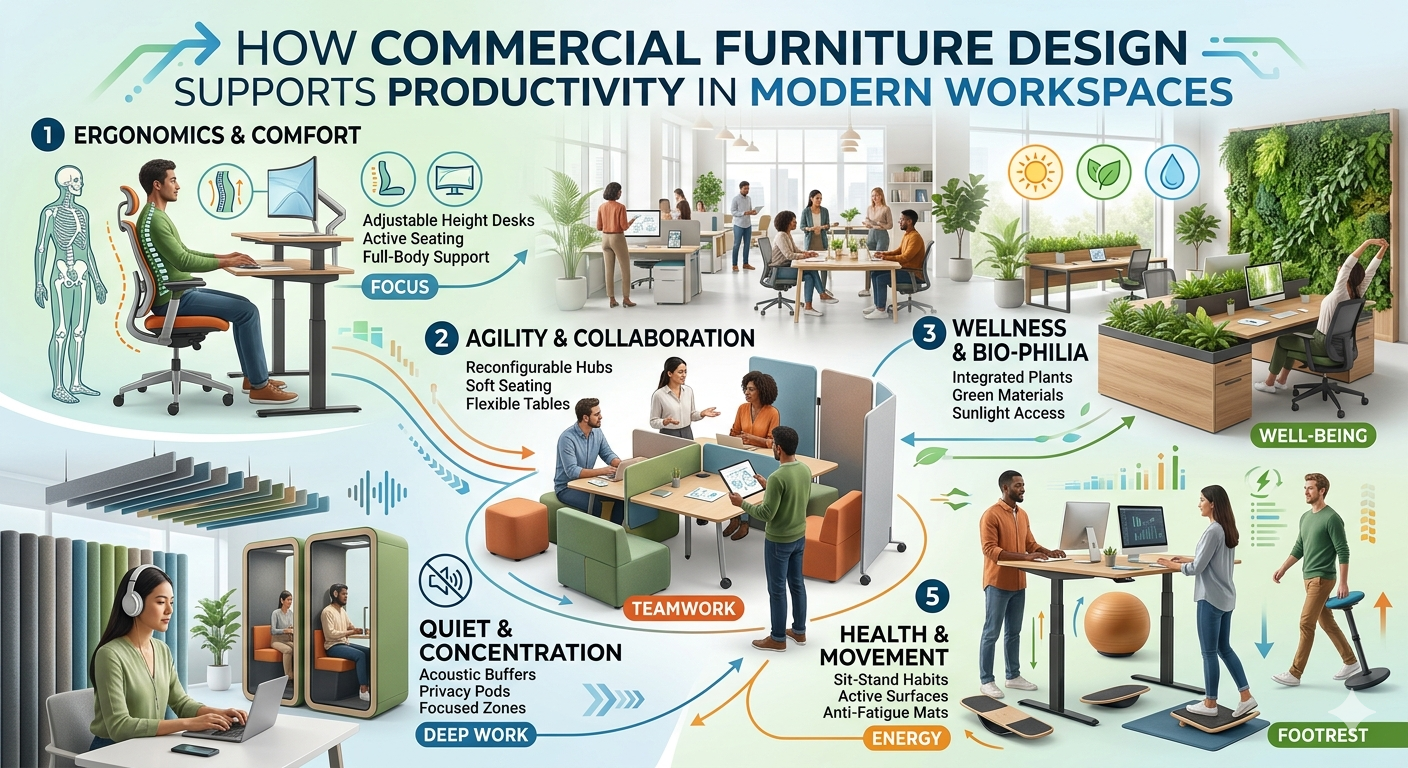
Most offices are designed by someone who never had to sit in them. That is the real problem. Bad chairs, wrong desk heights, no storage — these things tank focus before the workday even starts. Businesses across Australia are finally waking up to how much furniture actually matters. Spending on commercial furniture in Australia has grown steadily as companies realise that a well-fitted workspace is not a luxury. It is a basic productivity tool. Here is why the furniture in your office shapes the quality of work that happens inside it.
Does Office Furniture Actually Affect How People Work?
Yes, and the data backs it up. A study by the British Council for Offices found that poor workplace design reduces productivity by up to 17%. That is nearly one full day lost every week per employee.
Comfort is not fluff. When someone is uncomfortable, their brain spends energy managing that discomfort instead of doing actual work. Bad seating causes fatigue. Cluttered surfaces cause mental overload. Wrong lighting causes headaches. All of this adds up.
Good commercial furniture removes those distractions. When the physical environment is right, people stop fighting their surroundings and start focusing on their jobs.
What Makes Commercial Furniture Different From Regular Furniture?
Commercial furniture is built for heavy, daily use across multiple users. Residential furniture is not. A $300 flat-pack desk from a big box store will wobble, scratch, and break under office conditions within two years.
Commercial-grade pieces use thicker steel frames, high-density foam, reinforced joints, and surface materials rated for thousands of hours of use. They are also tested for ergonomic compliance — meaning they meet actual safety and posture standards, not just look good in a showroom.
The cost difference is real upfront. The savings over five years are bigger.
How Does Layout Tie Into Furniture Choices?
Layout and furniture are the same conversation. You cannot plan a great open-plan office and then fill it with bulky, fixed furniture that blocks sightlines and kills airflow.
Modern commercial furniture is modular by design. Desks that link together. Screens that clip on or come off. Storage that rolls or stacks. This flexibility matters because businesses change. Teams grow. Projects shift. Furniture that adapts to that change is worth a lot more than furniture that forces the team to adapt to it.
According to a 2023 Leesman workplace index report, 58% of employees say their furniture arrangement directly affects how well they collaborate with teammates.
What Role Does Ergonomics Play in Furniture Decisions?
Ergonomics is not about expensive chairs with too many knobs. It is about designing for the way humans actually sit, reach, and move during a workday.
The right desk height keeps shoulders relaxed. The right chair depth keeps blood flowing to the legs. Monitor arms reduce neck strain. These are not extras. Safe Work Australia lists musculoskeletal disorders as the leading cause of workplace compensation claims, costing Australian businesses over $28 billion annually.
Ergonomic commercial furniture is cheaper than workers comp and cheaper than the lost productivity that comes with chronic discomfort.
Is Aesthetics Part of the Productivity Equation Too?
Absolutely. A 2019 study published in the Journal of Environmental Psychology found that workers in well-designed, visually appealing offices reported 15% higher wellbeing scores and completed tasks faster.
People take their environment seriously. A workspace that looks thrown together sends a message — that detail and care do not matter here. That message leaks into how people approach their own work.
Commercial furniture with clean lines, consistent finishes, and intentional colour choices creates a workspace people actually want to be in. That is not decorating. That is strategy.
