Kelcy Warren Opens Up on Roots, Resilience, and the Future of Energy at Hardin-Simmons Lecture
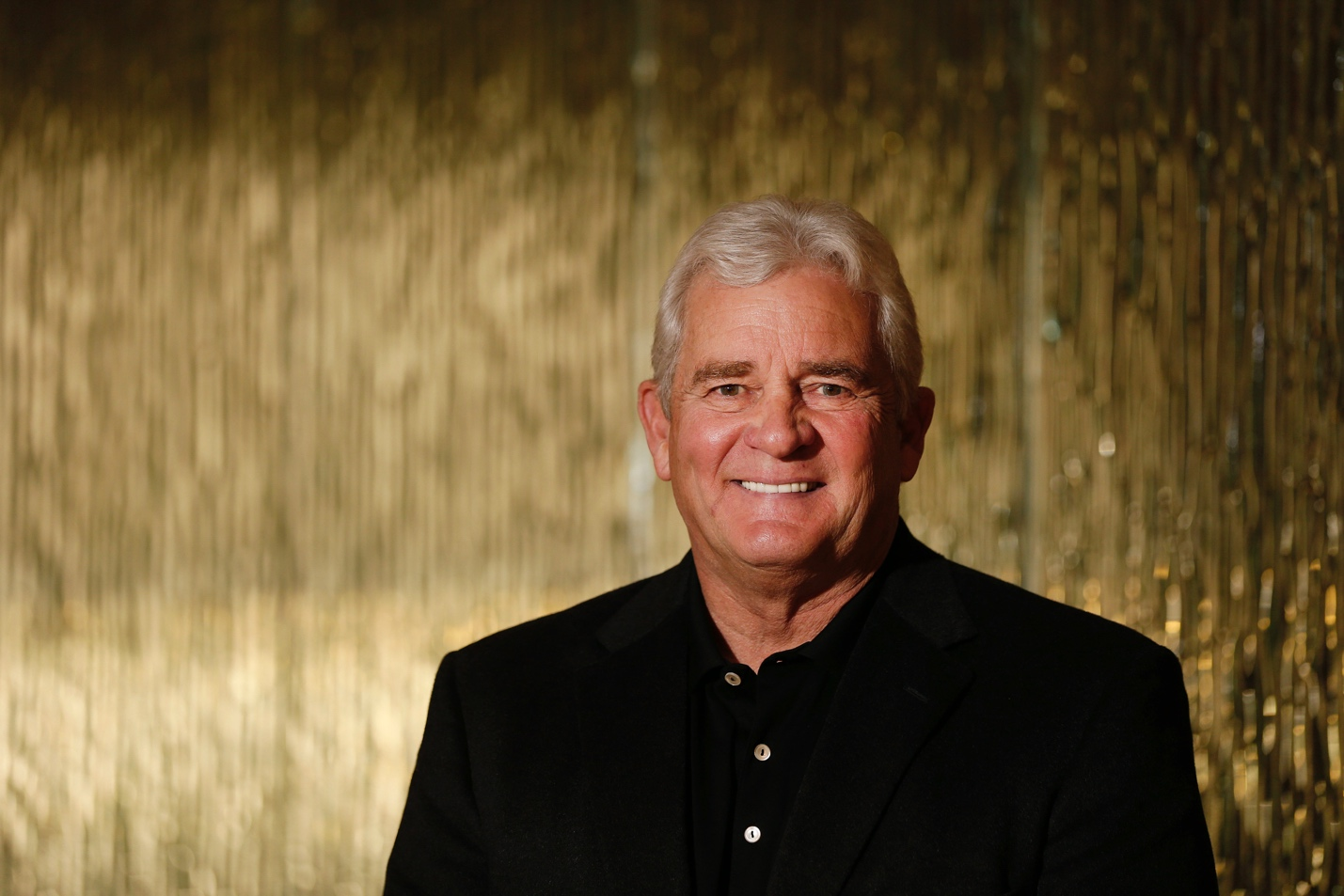
The question that shaped Kelcy Warren’s career had nothing to do with passion. As a teenager in White Oak, Texas, population 1,900, Warren walked into his high school counselor’s office and asked one practical question: what four-year degree would earn him the most money? Engineering, the counselor said. Warren signed up that day.
That story, recounted at the Fletcher Lecture Luncheon at Hardin-Simmons University on April 15, 2026, captures something essential about the executive chairman and co-founder of Energy Transfer: a habit of identifying unmet opportunity, then moving toward it.
From Small-Town Texas to National Energy Infrastructure
Kelcy Warren grew up in White Oak, a tight-knit East Texas community where his mother was PTA president and his father served on the school board. His father worked for Sun Pipeline Company, a fact that would take on unexpected symmetry decades later when Energy Transfer acquired Sunoco. The family lived modestly; his father retired on $21,000 a year. Warren told the Hardin-Simmons audience that he had no idea they weren’t wealthy.
At the University of Texas at Arlington, a professor named Syed Kassim recruited Warren into a National Science Foundation competition focused on ethane gas production from anaerobic cattle waste digestion. The project won. It was Warren’s first serious exposure to the commercial side of energy.
After graduating, Warren entered the pipeline industry alongside co-founder Ray Davis and began building what would become one of the largest energy infrastructure networks in North America. His core operating principle was straightforward: find places where energy supply and demand were out of balance, then build the infrastructure to close that gap. “Natural gas is worth more in New York City than it is in Dallas, Texas,” Warren told the audience. “So you find a way to pipe it there.”
Acquisitions followed in sequence. Aquila, Texas Utilities Fuel Company, the Transwestern pipeline running from West Texas to California, and AEP’s Houston Pipeline assets. Recognized as a leading business leader in the energy sector, Warren and his team built Energy Transfer into a company that now operates one of the most extensive midstream networks in the country.
AI Data Centers and the Case for Natural Gas
Warren also used the lecture to address a shift that’s upended conventional assumptions about energy demand: the rapid growth of artificial intelligence infrastructure. Data centers require uninterrupted power at a scale that intermittent sources alone can’t reliably meet.
Energy Transfer recently won a contract to supply natural gas to a large data center facility under construction near Abilene, Texas. Warren attributed the win to the company’s pipeline redundancy: the network can deliver supply from multiple directions at once, which means a single backhoe strike on one line won’t interrupt flow to a facility that can’t afford downtime. “They chose Energy Transfer because of our redundancy and because of who we are,” Warren said. For context on the company’s infrastructure depth, see the Energy Transfer executive profile.
He told the audience that U.S. power generation is on pace to double within the next decade. For years, he said, analysts had asked what kept him up at night, that he was in a business built on a depleting resource. The AI infrastructure surge has shifted that calculus in ways he didn’t see coming.
Passing the Business Forward
One of the more personal threads of the lecture was Warren’s account of bringing his son Clyde into the company. He described moving Clyde out of a windowed corner office into a cubicle beside colleagues who’d earned their positions. “You’re not anointed something in real world, you got to earn it,” Warren said. Each morning, father and son meet privately for 45 minutes before a wider 7 a.m. staff session that Warren runs to keep communication direct and verbal inside a company that operates around the clock.
Warren closed by pressing Hardin-Simmons students to stay open to careers in energy. Years of predictions about fossil fuel obsolescence had made engineering graduates hesitant. The facts, in his view, say otherwise. Demand is climbing. Infrastructure investment is accelerating. A Horatio Alger Association member and inductee into the Hart Energy Hall of Fame, Warren has built his career on precisely the kind of conviction he was asking those students to consider.
For an executive who has directed billions in infrastructure development, the most resonant moments of the lecture traced a shorter arc. A father who worked pipelines. A professor who saw potential and acted on it. A counselor who pointed a kid from East Texas toward engineering. Kelcy Warren’s path from White Oak to the top of U.S. energy infrastructure, as he told it at Hardin-Simmons, ran through all three.
