Who Is Carlos Scola Pliego? The Quiet Life of Sade Adu’s Only Husband
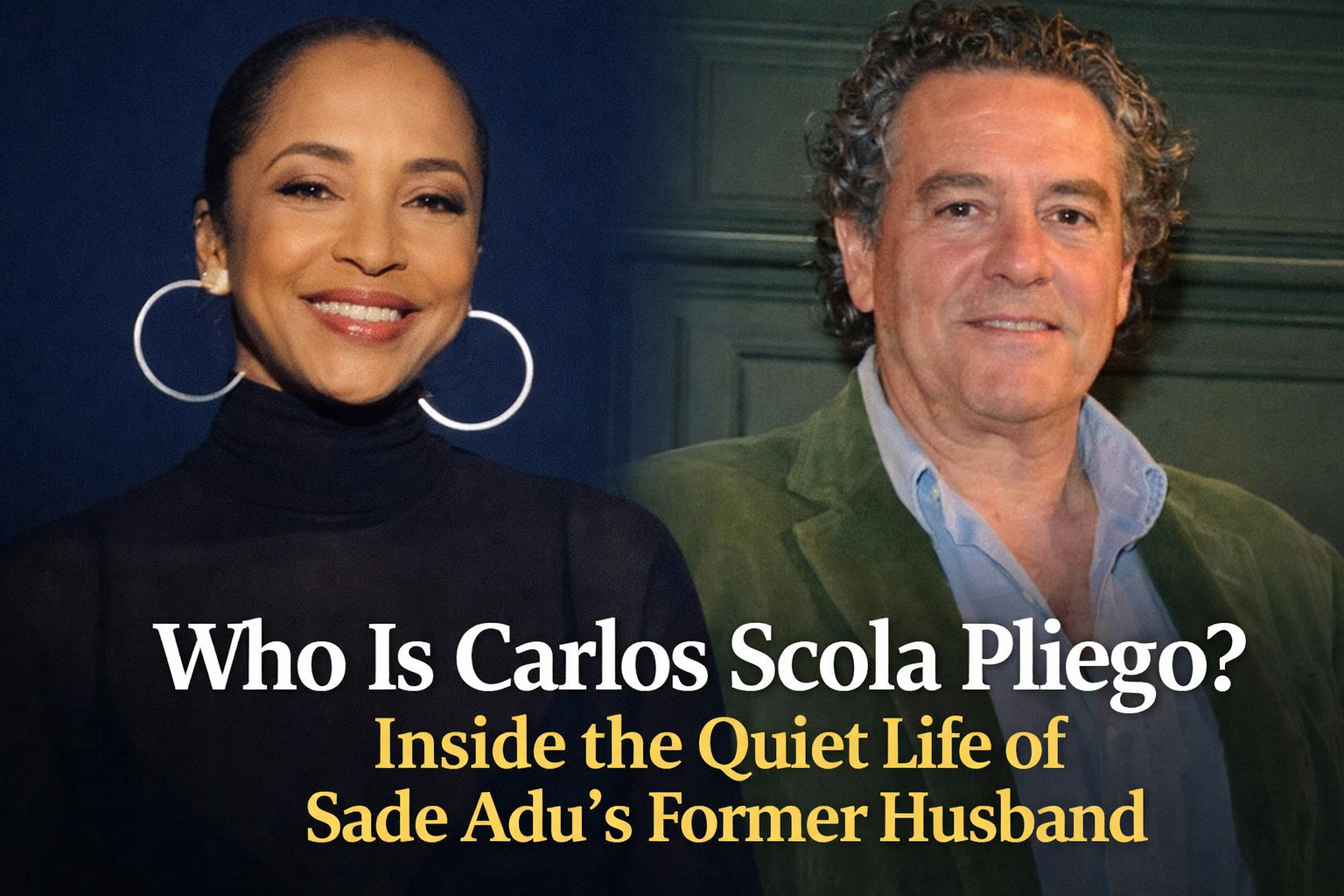
Carlos Scola Pliego is best known as the only man Sade Adu has ever married. He is a Spanish filmmaker. He liked to work behind the camera, not in front of it. His wife became a world famous singer. But Carlos stayed out of the spotlight the whole time.
Their marriage lasted only six years. Still, people talk about it today. Many fans ask simple questions. Who is he? How did he meet Sade? What does he do now? This article gives clear answers in easy words.
Quick Facts: Carlos Scola Pliego
| Category | Details |
|---|---|
| Full Name | Carlos Scola Pliego |
| Known For | Spanish filmmaker, Sade Adu’s only husband |
| Job | Film director, assistant director, writer, producer |
| Nationality | Spanish |
| Birthplace | Spain |
| Date of Birth | Not known to the public |
| Wife | Sade Adu (married 1989, divorced 1995) |
| Children | None with Sade Adu |
| Known Film Work | Ngira: Gorilas en la montaña (1988), Donde termina el corazón (1989), Goal II: Living the Dream (2007) |
| Life Today | Lives a private life, no clear location known |
Who Is Carlos Scola Pliego?
Carlos Scola Pliego is a Spanish film director. He also worked as an assistant director. He spent many years on movie sets, but stayed out of public view.
His name became known for one big reason. He married Sade Adu. She is a British-Nigerian singer. People know her songs like “Smooth Operator” and “No Ordinary Love.” Their bond brought a quiet filmmaker into a very public world.
Carlos worked in film both before and after his marriage. He took jobs as a writer, a producer, and a director on a few small projects. But his film career never grew as big as his fame from marrying Sade.
Today, people search his name mostly because they are curious about Sade’s past. His story shows that two very different worlds can meet through love. This can happen even when one person never wants the spotlight.
Early Life
We do not know much about Carlos Scola Pliego’s childhood. He was born in Spain. But his exact birth date is not known. There are no clear records about his hometown, his parents, or how he grew up.
This is not strange for him. Carlos has always kept his past private. He never gave interviews about his early life. He stayed quiet even after he married a famous star.
What we do know comes from his work, not his past. He clearly loved film from a young age. This love later led him into the world of European movies.
His quiet nature likely started long before he met Sade. It seems to be just who he is. People who worked with him say he liked quiet work more than public praise.
Carlos Scola Pliego’s Career in Film
Carlos Scola Pliego built his career behind the camera. In the 1980s, he worked as an assistant director on several films and videos. This job means he helped the main director plan scenes. He also helped manage the film crew.
One project we know about is the short film Ngira: Gorilas en la montaña. It came out in 1988. Film records show Carlos as the writer, co-director, and producer of this project. The film looked at wild gorillas living on a mountain.
He also worked on Donde termina el corazón in 1989. Years later, his name appears in the crew list for Goal II: Living the Dream, a sports film from 2007. This shows he kept working in film long after his marriage ended.
His career never matched the fame of his wife’s music. But in the film world, he built a steady name as a hard worker. People who study his work say he liked real stories more than big budget movies.
How Carlos Scola Pliego Met Sade Adu
The story of how Carlos Scola Pliego met Sade Adu starts on a film set. In the mid-1980s, Sade went to Spain. She was there to shoot music videos for her album Promise. A director named Brian Ward led the project. Carlos worked as part of the film crew.
At first, they only knew each other through work. They worked together during long days of filming. But over time, their bond grew into something deeper than just work.
Sade was going through a hard time in her life then. She had just finished a tiring tour. Her father had also passed away not long before. She wanted some peace, so she went back to Spain. There, she met Carlos again.
Their friendship slowly grew into something more. By 1987, Sade was recording music in France. At that time, she called Carlos her husband in public. This happened even before their real wedding. It showed how serious their love had become.
Carlos Scola Pliego and Sade Adu’s Marriage
Carlos Scola Pliego and Sade Adu got married on October 11, 1989. Their wedding took place at a castle in Spain. This quiet setting matched their private style well. There were no big crowds and no loud media coverage.
After the wedding, the couple lived in Madrid. Carlos stood by Sade during this time. He was there while she worked on her 1988 album Stronger Than Pride. This album had songs like “Nothing Can Come Between Us.”
Their life together stayed mostly hidden from the public. Sade rarely talked about her marriage in interviews. Carlos, true to his nature, never spoke about it either.
Their marriage started off strong. But reports say it later faced some hard times. Sade’s growing fame and Carlos’s quiet career may have pulled them apart. Even so, they stayed married for several years before things changed for good.
Why Did Carlos Scola Pliego and Sade Adu Divorce?
Carlos Scola Pliego and Sade Adu got divorced in 1995. This was six years after their wedding. Neither one has ever shared the real reason in public. This fits how they both liked to keep things private.
Some writers think distance played a part. Sade’s job kept her traveling and recording often. Carlos kept working quietly in film. This may have pulled them in different directions over time.
Some music fans also point to Sade’s later songs. They feel some of her songs carry feelings tied to this time in her life. But this is only a guess. It is not a proven fact.
One thing stays clear, though. Both of them handled their split with grace. Neither one used the media to point blame. This calm way matches the privacy that shaped their whole relationship.
Did Carlos Scola Pliego and Sade Adu Have Children?
No, Carlos Scola Pliego and Sade Adu did not have children together. Their marriage lasted from 1989 to 1995. They did not start a family during that time. This is one of the most searched questions about them.
Sade later became a mother in 1996. By then, her marriage to Carlos had already ended. Her daughter came from a different relationship. This happened after Sade moved on with her life.
Carlos and Sade put most of their focus on their own careers. This may explain why they did not have kids together. Their bond seemed to be more about support and shared art than about building a family.
This also explains why so little is known about their home life. With no children tying them together in public, both Carlos and Sade found it easier to step away from attention after their split.
Life After the Divorce
After the divorce, Carlos Scola Pliego went back to a quiet life. He kept working in film for a while. His last known credit is from Goal II: Living the Dream in 2007. After that, there is very little public record of his work.
He never used his marriage to Sade to gain more fame. Many people in his place might have done interviews or written a book. Carlos chose a different path. He stayed quiet instead.
There are no clear reports of him getting married again. There are also no reports of him having kids with anyone else. His life after the divorce looks just as private as it did before he met Sade.
This steady choice says a lot about him. The film world often wants people to be seen and known. But Carlos Scola Pliego chose privacy instead. He has kept that choice for many years now.
Where Is Carlos Scola Pliego Now?
As of 2026, there is no clear public news about where Carlos Scola Pliego lives. Some people think he may still live in Spain. But this has never been proven.
He does not seem to use social media. There are no new interviews, photos, or sightings linked to his name. This fits the same quiet pattern he has followed his whole life.
His net worth has also never been proven. Some websites guess at a number. But none of these numbers come from a real, checked source. Readers should be careful with any dollar amount they see online.
One thing stays true, though. Carlos still chooses to stay out of public life. Even many years after his marriage to a famous singer, he keeps his life almost fully private.
Why People Still Search for Carlos Scola Pliego
People keep searching for Carlos Scola Pliego mostly because of his link to Sade Adu. She is one of music’s most respected and private stars. She rarely talks about her past. This makes fans curious about the one man she married.
His own mystery adds to the interest too. He stayed away from cameras and interviews his whole life. So very few real facts exist about him. This gap makes people want to know more.
His film work also draws interest from movie fans. Titles like Ngira: Gorilas en la montaña show another side of him. This side has nothing to do with his marriage at all.
In the end, his story stands out for a simple reason. Carlos Scola Pliego shows that someone can be part of a famous love story without wanting fame for himself.
Final Thoughts
Carlos Scola Pliego’s story looks simple on the outside. But it holds quiet meaning underneath. He was a working filmmaker who fell in love with one of music’s most loved voices. Their marriage was short and private. It stayed mostly away from public eyes.
His choice to stay quiet about his life says something real. In a world where people share everything, he proved that privacy is still possible. Even when you are linked to fame, you can choose to stay out of it. That choice has kept his story interesting for many years.
Sade Adu has never married again since their divorce. This simple fact keeps Carlos Scola Pliego’s name tied to her story. He remains the only man she has ever called her husband.
His life reminds us of something simple but true. Not every story needs noise to matter. Sometimes, the quietest people hold the most interesting stories of all.
Frequently Asked Questions
Who is Carlos Scola Pliego?
Carlos Scola Pliego is a Spanish filmmaker. He is known as the only husband of singer Sade Adu. He worked as an assistant director, writer, and producer in film.
When did Carlos Scola Pliego marry Sade Adu?
He married Sade Adu on October 11, 1989. The wedding was a private event at a castle in Spain.
Why did Carlos Scola Pliego and Sade Adu divorce?
They divorced in 1995. Neither one has shared the real reason in public.
Did Carlos Scola Pliego and Sade Adu have children?
No. They did not have children during their marriage. Sade had her daughter later, with a different partner.
What films did Carlos Scola Pliego work on?
He worked on Ngira: Gorilas en la montaña (1988), Donde termina el corazón (1989), and Goal II: Living the Dream (2007).
Is Carlos Scola Pliego on social media?
No. He has no known public social media account. He has always avoided public attention.
Where is Carlos Scola Pliego today?
No one knows for sure where he lives now. Some people believe he still lives in Spain.
Want to learn more stories like this? Visit Marco Republic and stay informed with meaningful content.
