How a Dining Table Shapes the Function and Style of Shared Spaces
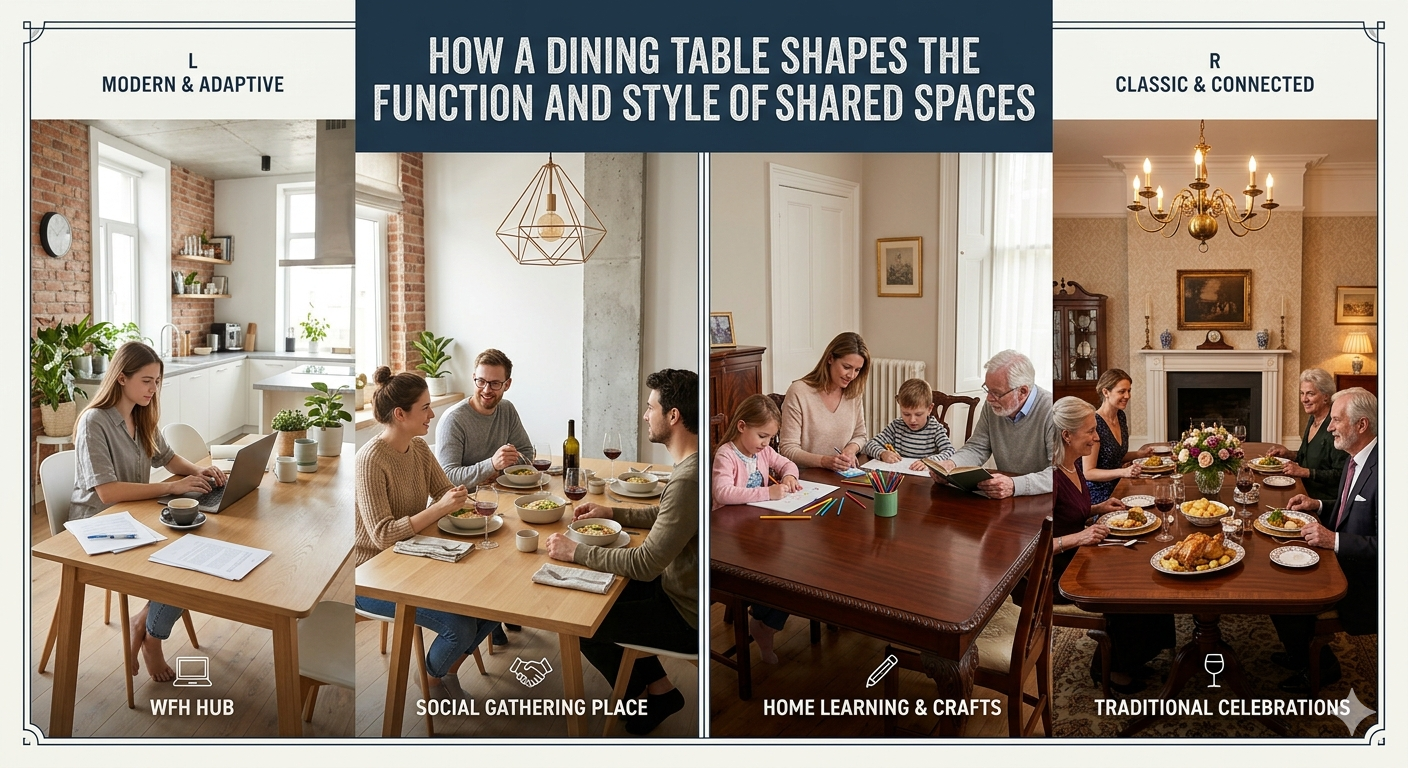
Most people think the sofa is the heart of a home. It’s not. The dining table is. It’s where people eat, argue, celebrate, work, and sit in comfortable silence. A 2023 study by the Australian Institute of Family Studies found that families who eat together at a table at least four times a week report significantly higher scores in communication and emotional connection. The table earns that. It is functional architecture. It sets the pace of a room, controls traffic flow, and signals what kind of space you’re walking into before you even sit down.
Does the Shape of a Dining Table Actually Change How People Interact?
Yes, and the research backs it up. Round tables eliminate hierarchy. No head of the table. No power seat. Studies in social psychology show that round seating arrangements increase cooperative behavior and reduce conflict in group settings. King Arthur knew this. Restaurants that use round tables report 12% higher table satisfaction scores compared to rectangular setups, according to a 2021 Cornell hospitality study.
Rectangular tables do something different. They organize. They create a clear axis — useful for big families, dinner parties, or anyone who runs a household like a meeting. The shape you choose is a quiet decision about how you want people to relate to each other at your table.
How Much Space Does a Dining Table Actually Need?
More than most people allow for. The basic rule is 60 to 90 centimeters of clearance on all sides — enough for a chair to pull out fully and a person to walk behind without squeezing. A table for six needs at least 90cm per person along its length. Most people underestimate this and end up with a table that dominates the room or one that seats four comfortably and eight awkwardly.
In Australian homes, the average dining area is around 12 to 15 square meters. A 180cm rectangular table fits without overwhelming that space. Go to 220cm and you’re starting to eat into the room. Measure twice. Seriously.
What Materials Last the Longest and Look the Best?
Solid timber is the honest answer. Oak, walnut, and spotted gum hold up for decades with basic maintenance. They develop a patina over time that actually adds character. A good solid oak dining table costs between $1,200 and $4,000 in Australia. That sounds steep until you realize it outlasts three particle board sets.
Marble looks spectacular and is genuinely durable against scratches, but it stains with acidic foods — red wine and citrus are its enemies. Sintered stone solves that. It looks like marble, resists staining, and handles heat. Premium sintered stone tables from Italian and Scandinavian designers sit between $3,000 and $8,000. For heavy daily use in a family home, that investment makes sense.
How Does a Dining Table Anchor the Rest of the Room’s Design?
Everything else responds to the table. The pendant light hangs above it. The rug frames it. The chairs echo its material or contrast it deliberately. A dark walnut table pulls warm-toned chairs and brass lighting naturally. A white Carrara marble surface calls for clean lines and minimal decoration around it. Interior designers call this anchoring — the table sets the visual key and everything else plays to it.
Extendable tables are worth the premium for smaller homes. A 140cm table works daily for two people. Open it to 200cm for a dinner party. Space Furniture’s Italian and Danish collections handle this particularly well — the mechanisms are seamless and the proportions hold when extended.
Is Buying a Designer Dining Table Worth the Investment?
For a piece you’ll use every single day, yes. The average Australian household keeps a dining table for 11 years, according to furniture industry data from AFGC. Divide a $3,000 table by 11 years of daily use and the cost per day is under $1. A cheap table at $500 that warps in three years costs more per year and looks worse while it’s doing it.
Quality joinery, proper mortise-and-tenon construction, and kiln-dried timber are what separate a table that lasts from one that wobbles by year two. The price premium on good construction is real. So is the difference.
