How Pearl Earrings Continue to Define Timeless Jewellery Style
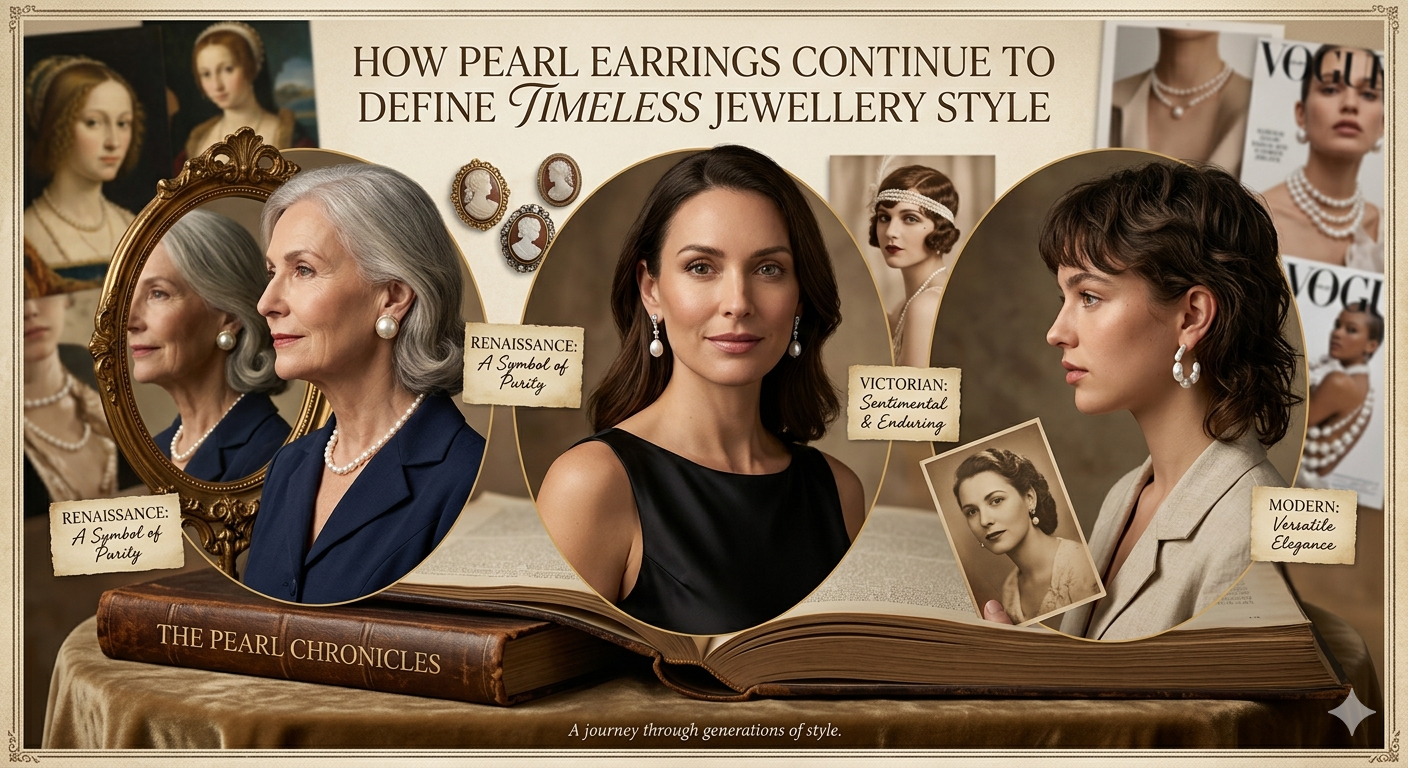
Pearl earrings have been around for over 4,000 years. That is not a trend. That is a fact about human taste. From ancient Rome to modern runways, pearls have never left. They just keep showing up in new forms. If you want to understand why certain jewellery lasts while everything else fades, look at timeless pearl earrings. They tell the whole story. The global pearl jewellery market was worth USD 12.4 billion in 2022 and is growing at 14.2% annually. That growth is not an accident.
Why Do Pearls Last When Other Trends Don’t?
Most jewellery follows fashion cycles. Pearls don’t. They sit outside the trend cycle because they represent something deeper than style. They represent status, patience, and nature. A single pearl takes 2 to 5 years to form inside a living creature. That origin story gives it emotional weight no factory-made gemstone can match. When you wear pearls, you wear time itself.
What Makes Pearl Earrings Work Across Every Era?
The shape is everything. Pearls are round or near-round. That geometry works with every face shape and every fashion decade. In the 1920s, long pearl strands matched the angular flapper aesthetic. In the 1950s, pearl studs fit the polished post-war look. In the 1990s, baroque pearls matched grunge’s rougher edge. The form is flexible enough to fit any era without trying.
Do Real Pearls Actually Outperform Fake Ones?
Yes, and it shows fast. Natural pearls have a quality called orient, which is the soft rainbow glow beneath the surface. Imitation pearls made from glass or plastic cannot replicate this. Under a light source, a real pearl glows from within. A fake one just reflects. That difference is visible to the naked eye. Akoya pearls, the gold standard for earrings, have a lustre measured above 90 on the Gemological Institute of America scale. Nothing fake comes close.
Are Pearls Actually a Good Investment?
South Sea pearls, which are the largest saltwater pearls grown in Australia and Indonesia, have appreciated in value by 15% over the last decade. Natural pearls from the Persian Gulf sell at auction for tens of thousands of dollars per piece. The 2011 Christie’s auction sold a natural pearl necklace for USD 11.8 million. Compare that to fast fashion jewellery that loses value the moment it leaves the shop. Pearls hold. They appreciate. They pass down generations.
Why Do Pearl Earrings Work for Both Formal and Everyday Wear?
Because their scale is right. Pearl studs sit close to the face. They don’t compete with clothing or makeup. They frame. A 7mm Akoya pearl stud works at a job interview and at a wedding. Drop pearl earrings work at dinner and on a red carpet. The format allows versatility without sacrificing identity. That is rare in jewellery design.
What Does the Science Say About Pearl Colours?
Pearl colour is not dyed. It forms through conchiolin and aragonite layers inside the mollusc. White and cream pearls form in Akoya oysters. Golden pearls form in Pinctada maxima oysters in the Philippines. Black pearls form in Pinctada margaritifera in French Polynesia. Each colour is a biological result, not a cosmetic choice. That natural variance is why pearl earrings look different on every person who wears them. The pearl adapts to the wearer’s skin tone. No synthetic jewellery does that.
How Did Famous Women Cement Pearl Earrings in Culture?
Coco Chanel popularised layered pearls in the 1920s and declared them essential for the modern woman. Audrey Hepburn wore pearl studs in Breakfast at Tiffany’s, and that image became an icon of elegance. Princess Diana wore pearl drop earrings to nearly every formal event. Michelle Obama wore pearls at the 2009 inauguration. These are not coincidences. These are women who understood that certain jewellery carries meaning beyond the moment. Pearl earrings say something without speaking.
Is the Demand for Pearl Earrings Growing Right Now?
Yes, sharply. Google Trends data shows a 34% increase in pearl jewellery searches from 2020 to 2024. Gen Z buyers are the fastest-growing segment in the pearl market, with 28% of buyers under 30 as of 2023. Social media has pushed pearls back into cultural relevance. But unlike most social media trends, pearl earrings have a 4,000-year foundation underneath them. The algorithm did not create this demand. It just reminded people of something they already knew was beautiful.
