How Coffee Tables Influence Functionality and Style in Living Spaces
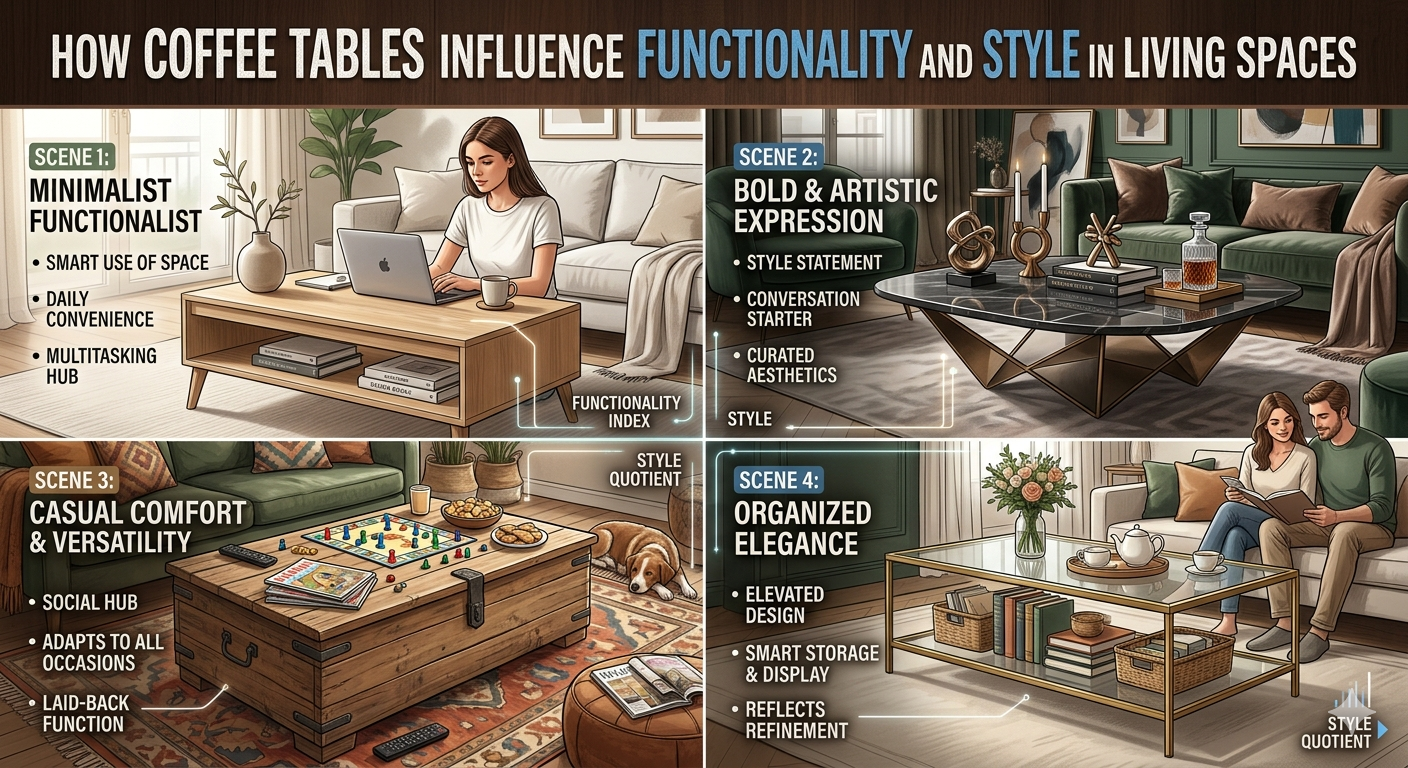
Most people underestimate the coffee table. They treat it as a surface for remote controls and cold cups. But interior designers know better. Coffee tables are the visual anchor of a living room. They set proportion. They define circulation paths. They tell you something about how a space is meant to be used. The global furniture market hit $720 billion USD in 2023. A significant portion of that spend is driven by people trying to get their living rooms right. The coffee table is often the last decision made and the one that ties everything together. Get it wrong and the whole room feels off.
What Does a Coffee Table Actually Do for a Living Room?
A coffee table does three things. It grounds the seating arrangement. It provides a usable surface. It adds a visual layer between vertical furniture like sofas and the floor. Without it, a living room feels unfinished. The empty floor space between a sofa and TV becomes dead space. The coffee table activates that zone. It gives people a place to put things. It creates a reason to gather around a central point.
How Do You Choose the Right Size Coffee Table?
Proportion is everything. The general rule is that a coffee table should be two-thirds the length of your sofa. If your sofa is 2.4 meters long, your table should be around 1.6 meters. Height matters too. Standard coffee table height is 40 to 45 centimeters. This puts the surface close to sofa seat height. Too high and it feels like a dining table. Too low and it is hard to reach. Leave at least 45 centimeters of space between the table and the sofa for comfortable movement.
Does Shape Matter as Much as Size?
Yes. Shape changes how a room moves. Round tables soften spaces. They work well in small rooms because there are no sharp corners to navigate around. Rectangular tables are the most popular globally. They suit longer sofas and align naturally with most room layouts. Square tables work best in square seating arrangements with chairs on multiple sides. Oval tables are an underrated middle ground. They look elegant, reduce corner risk, and still offer good surface area.
What Materials Hold Up Best Over Time?
Solid timber is the most durable option. Hardwoods like oak, walnut, and blackwood resist scratches and dents. They also age well. A quality timber coffee table bought today will look better in 10 years than it does now. Marble is beautiful but heavy and porous. It requires regular sealing and is susceptible to staining from acidic drinks. Glass looks clean but shows fingerprints and is a safety consideration in homes with children. Metal frames add industrial character but can scratch flooring if not fitted with felt pads.
How Does Storage Work in a Coffee Table?
Storage coffee tables are underrated. They solve a genuine problem. Living rooms accumulate clutter fast. Remotes, magazines, throw blankets, and kids’ toys all end up on the floor. Tables with drawers, lift-top mechanisms, or open shelving compartments manage that clutter without adding another piece of furniture. Lift-top tables are particularly practical for people who work from their couch or eat in front of the TV. The surface raises to a comfortable working height and drops back flat when not needed.
Can a Coffee Table Work With Multiple Design Styles?
The most versatile coffee tables are neutral in form and material. A raw timber table with a simple rectangular top works in a coastal, Scandinavian, or contemporary interior without modification. Ornate or highly styled tables are harder to transition. If you repaint walls or reupholster a sofa, an intricate brass and glass table may no longer fit. Buying for versatility means you do not have to replace the table every time the room evolves.
What Is the Difference Between a Feature Table and a Functional Table?
Feature tables are chosen for visual impact. A sculptural travertine slab on metal legs. An oversized antique trunk. These become talking points. Functional tables are chosen for use. They have enough surface area, appropriate height, and practical storage. The best tables do both. They look deliberate without sacrificing usability. The mistake most people make is choosing purely for aesthetics and then resenting the table every time there is nowhere to put a cup.
How Do You Style a Coffee Table Without Making It Look Like a Display Case?
The three-item rule works well. One tall element. One mid-height object like a book stack or tray. One low element like a small plant or candle. This creates visual depth without crowding the surface. Books should be kept to a stack of two or three. A single oversized art book laid flat works better than six paperbacks piled high. Leave at least 40% of the table surface clear. Clutter on a coffee table is the fastest way to make a stylish room look messy.
