Quantity Takeoffs vs BIM Quantity Extraction: Which Method Gives Contractors a More Accurate Construction Estimate?
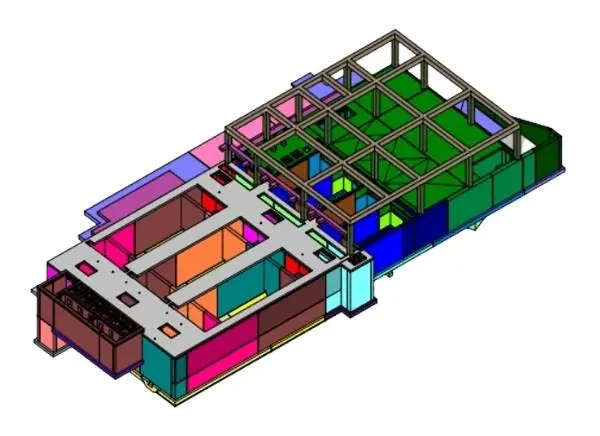
Construction estimating starts with one simple thing: quantities. If the quantities are off, the budget will be off too. It does not matter how good the pricing database is or how experienced the estimator is. The takeoff is the base layer. In a lot of projects, that base layer still comes from manual measurement. But BIM-based quantity extraction has changed the conversation. The model now carries enough structured information to support faster, more repeatable, and often more accurate takeoffs when it is built properly. Recent research shows that BIM-based quantity takeoff can reduce human error, improve consistency, and support more agile cost decisions when the model is clean and the rules are clear.
Why does the first takeoff still decide the estimate?
This is where BIM Modeling Services start to matter. A model is not useful because it looks impressive. It is useful because it can be measured. When the geometry, naming, and material data are consistent, estimators can pull quantities directly from the model instead of tracing every line by hand. Autodesk’s takeoff guidance and recent BIM research both point to the same idea: a structured model makes the takeoff process faster, more repeatable, and easier to audit.
That matters because small quantity errors turn into real money fast. A few extra sheets of drywall may not sound like much. A few wrong counts across structure, interiors, and MEP can shift the bid by a lot. The contractor who starts with a reliable model usually gets a cleaner estimate, a better buyout plan, and fewer nasty surprises after award.
Manual takeoff vs BIM quantity extraction
| Factor | Manual takeoff | BIM quantity extraction |
| Speed | Slower, especially on revisions | Faster once the model is ready |
| Human error | Higher risk of missed counts | Lower risk when model rules are clean |
| Revision handling | Old sheets can slip in | Changes are easier to track |
| Trade coordination | Separate views, more duplication | Shared model, fewer overlaps |
| Audit trail | Harder to trace assumptions | Easier to document source quantities |
This chart summarizes the practical differences contractors see in day-to-day estimating. The exact result still depends on model quality, project complexity, and estimator discipline.
Where manual quantity takeoffs still hold value
Manual takeoff is not dead. It still has a place. In some jobs, the drawings are the only reliable source. In others, the version is incomplete or not updated enough to be believed. And even in BIM-heavy workflows, guide checks nonetheless count. A 2026 overview notes that guide takeoff stays widely widespread even in BIM-based tasks, which tells you something critical: the exceptional groups do not treat BIM as a blind substitute. They deal with it as a better start line, then verify what subjects.
Manual takeoff can still be useful when:
- The project is small and simple
- The model is incomplete or poorly structured
- The team needs a quick sanity check
- The scope includes unusual items, but the model does not capture them well
That said, manual work gets expensive when revisions pile up. It is one thing to measure a single package by hand. It is another to keep remeasuring every time the design changes.
Why BIM extraction tends to be more accurate
BIM quantity extraction is usually more accurate because it pulls from a structured source instead of a human reading two-dimensional drawings. A 2024 paper on high-accuracy quantity takeoff described automated extraction from BIM models, supported by a quantity precision check module and dashboard-based reporting. Another 2022 framework used semantic rules and knowledge modeling to make BIM-based quantity takeoff more code-compliant and reliable. That is the real strength of BIM: it can combine geometry with logic.
The catch is that the model must be built with takeoff in mind. If the objects are named badly, if compound assemblies are incomplete, or if the elements do not follow measurement rules, the extraction can still be wrong. A 2025 MDPI study introduced validation metrics such as inconsistency detection rate, parameter consistency rate, quantity accuracy improvement, and automated reporting efficiency to deal with exactly that problem. In short, BIM extraction is stronger than manual work when the model is structured well and checked properly.
What improves takeoff accuracy most
| Accuracy factor | Why it matters | What it affects |
| Clear object naming | Prevents confusion between similar elements | Fewer wrong counts |
| Correct material data | Helps map objects to pricing items | Better cost matching |
| Clean geometry | Ensures lengths, areas, and volumes are reliable | Lower measurement error |
| Version control | Keeps old revisions from slipping in | Better revision tracking |
| Rule-based validation | Flags model inconsistencies before pricing | More defensible takeoff |
How a Construction Estimating Service turns quantities into a real budget
A quantity list is not a budget. That is where a Construction Estimating Service earns its keep. Estimators take the extracted counts and layer in labor, equipment, indirects, overhead, and risk. Procore defines estimating as calculating both direct and indirect project costs from design and market data, which is exactly why quantity accuracy matters so much. If the quantity base is weak, the estimate will not hold.
A good estimator will also adjust for real-world conditions that a model cannot know by itself:
- access constraints
- labor productivity
- site congestion
- weather exposure
- long-lead procurement risk
That is why the best contractors do not treat BIM and estimating as separate silos. They let the model feed the estimate, then let the estimator test whether the numbers make sense in the field.
Simple calculation: how quantity accuracy changes cost
Imagine a project with a $2,500,000 materials package.
If a manual takeoff overstates that package by 5%, the project may overbuy by $125,000.
If BIM extraction trims that error to 2%, the overbuy drops to $50,000.
- Manual error cost: $125,000
- BIM extraction error cost: $50,000
- Illustrative difference: $75,000
That is one package. On a full project with structure, interiors, and MEP, the difference can get much larger. This is where quantity accuracy stops being a technical detail and becomes a margin issue.
Where does Xactimate fit in
Xactimate Estimating Companies are especially relevant when the work is tied to restoration, damage repair, or claims. Verisk describes Xactimate as property claims estimating software that is precise, fast, and flexible. Its pricing data services are built from market research and estimate submissions, and Verisk says the system supports standardized line-item pricing across more than 460 geographic regions. That structure is useful when the estimate needs to be reviewed by an insurer, adjuster, or owner who expects a consistent format.
In practical terms, Xactimate isn’t always competing with BIM. It is fixing a unique trouble. BIM facilitates with an amount of accuracy and scope clarity. Xactimate allows gift repair and recovery charges in a format that is easier to review, approve, and examine. For contractors who paint in harm repair, this will shorten the approval cycle and reduce disputes over what was measured and what was priced.
Which method gives contractors the more accurate estimate?
The honest solution is: BIM quantity extraction typically offers the extra accurate place to begin, however best if the version is well built and validated. Manual takeoff nevertheless topics as a cross-take a look at, particularly on smaller jobs or unusual scopes. The most dependable contractors do not select one approach and forget about the alternative. They use BIM to reduce errors, manual evaluation to catch facet instances, and dependent estimating to show the quantity in a real price range.
Best use by scenario
| Scenario | Best method | Why |
| Standard new-build with coordinated model | BIM quantity extraction | Fast, repeatable, model-based counts |
| Small repair or incomplete model | Manual takeoff + spot checks | Faster than forcing a weak model |
| Restoration or claims work | BIM + Xactimate estimate format | Good scope clarity and reviewability |
| Complex revision-heavy project | BIM extraction with manual QA | Better revision tracking and fewer misses |
Final thought
The question is not whether manual takeoff still matters. It does. The real question is which method gives the contractor a better chance of winning the bid without eating the margin later. On that point, BIM quantity extraction has the edge. It is faster, easier to audit, and better at keeping up with revisions. Manual takeoff still has value, but it is no longer the strongest default when the model is clean. When BIM Modeling Services produce a reliable model, when a Construction Estimating Service turns that data into a workable budget, and when Xactimate Estimating Companies are used for claims or repair work that needs a standardized format, the contractor gets a more defensible estimate and a better shot at protecting profit. That is the real advantage.
FAQs
1. Is BIM quantity extraction always better than manual takeoff?
Not always. It is usually more accurate when the model is complete and well structured, but manual review still helps catch unusual items or model errors.
2. Why do estimators still need to review BIM quantities?
Because quantities do not include labor, overhead, site conditions, or risk. A Construction Estimating Service adds those layers so the number becomes a buildable budget.
3. When is Xactimate most useful?
It is most useful in restoration, damage repair, and claims work where a standardized, auditable estimate is needed for outside review.