How Collagen Protein Bars Support Convenient Nutrition for Busy Lifestyles
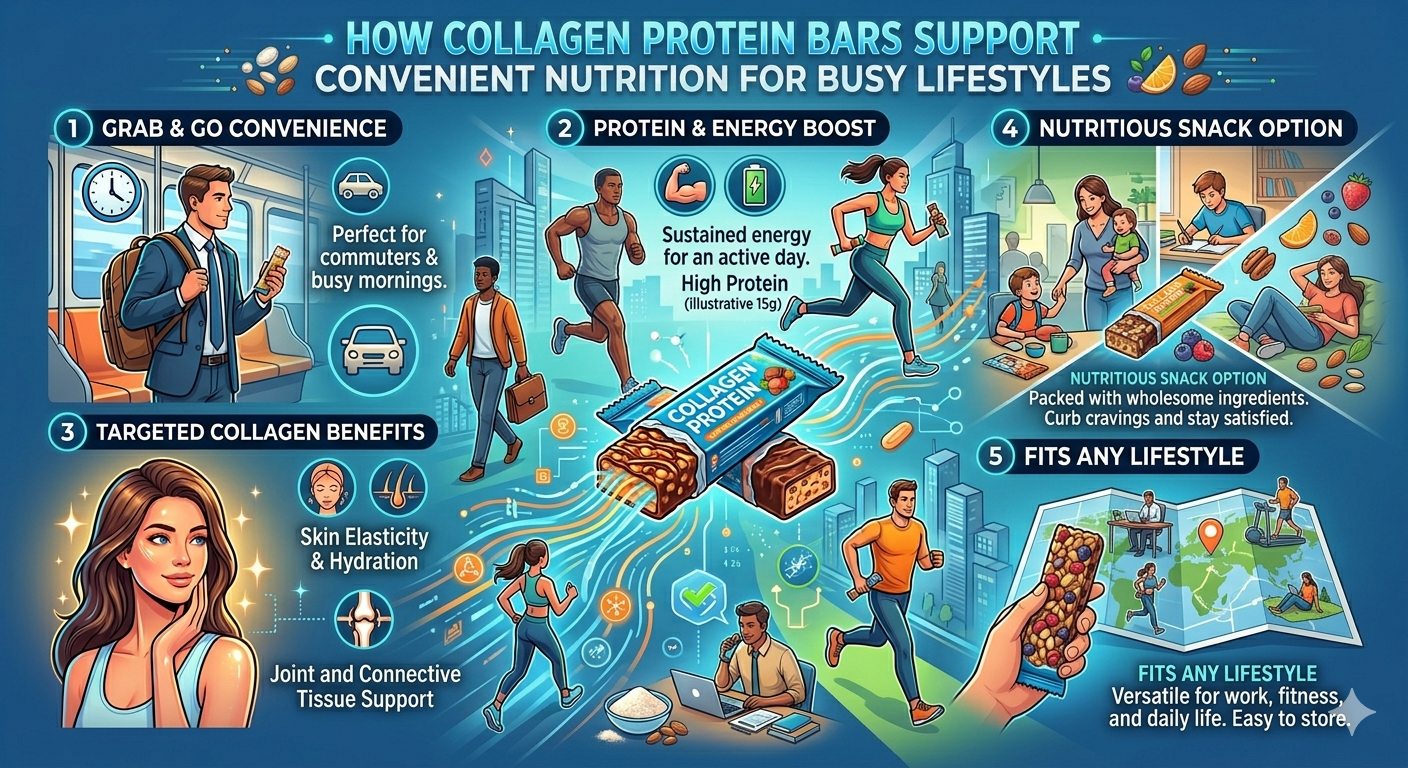
Most people skip meals. They grab whatever is close. This is not laziness. It is time pressure. Research from the International Food Information Council shows 56% of adults say time is their top barrier to eating well. That gap is exactly where nutritious on-the-go collagen protein bars step in. They are not a gimmick. They are a real answer to a real problem. Collagen is the most abundant protein in the human body. Getting enough of it through a busy diet is hard. Bars solve that problem fast.
What Makes Collagen Different From Regular Protein?
Most protein bars use whey or soy. Collagen is different. It comes from animal connective tissue. It is made of amino acids like glycine, proline, and hydroxyproline. These are not common in regular diets. Your body uses these specific amino acids to build skin, cartilage, tendons, and bones. A 2019 study in Nutrients found that 15 grams of collagen peptides daily improved skin elasticity by 12% in 12 weeks. That is not a skincare claim. That is biology.
How Much Protein Does Your Body Actually Need?
The average adult needs 0.8 grams of protein per kilogram of body weight daily. Active adults need 1.2 to 2.0 grams. Most people fall short. The Australian Bureau of Statistics found that 1 in 3 Australians does not hit their daily protein target. A single collagen bar typically delivers 10 to 20 grams of protein. That is a meaningful contribution. Not a complete solution. A real contribution.
Why Are Bars Better Than Shakes for On-the-Go Eating?
Shakes need water. They need a shaker. They spill. Bars do not. You put a bar in your bag and forget it. It takes 60 seconds to eat. There is no preparation. No cleanup. For people catching trains, sitting in back-to-back meetings, or doing school runs, that simplicity is not a minor point. It is the whole point.
What Are the Real Ingredients Worth Looking At?
Not all collagen bars are the same. The best ones use hydrolyzed collagen peptides. Hydrolysis breaks collagen into smaller chains. Your gut absorbs them faster. Look for bars with less than 8 grams of sugar. Bars using natural sweeteners like dates, honey, or monk fruit are a better call than those loaded with maltitol or high-fructose corn syrup. Fiber matters too. Bars with at least 3 grams of dietary fiber help you feel full longer.
Do Collagen Bars Actually Support Joint and Bone Health?
Yes. And the science backs it. A study published in Current Medical Research and Opinion showed that athletes who took collagen supplements daily reported 43% less joint pain over 24 weeks compared to a placebo group. Collagen does not just sit in your skin. It lives in your joints. Your cartilage is 65% to 80% water and type II collagen. When collagen intake drops, that structure weakens over time. Bars that deliver a consistent daily dose help maintain that foundation.
When Is the Best Time to Eat a Collagen Bar?
Timing matters more than most people think. Eating collagen with vitamin C boosts absorption significantly. Vitamin C is essential for collagen synthesis. It helps convert the amino acid proline into hydroxyproline. So a bar eaten with a piece of citrus fruit or a vitamin C drink is more effective than a bar eaten alone. Pre-workout or post-workout is also smart. Your tissues are in repair mode after exercise. That is when amino acids get put to work.
Are Collagen Bars Worth the Cost Compared to Other Snacks?
A quality collagen bar costs roughly $3 to $5 AUD. A coffee and muffin combo costs more and delivers almost no usable protein. A bag of chips costs less but contributes nothing to tissue repair, satiety, or muscle function. When you frame the cost against the nutrition delivered, the bar wins. Not because it is cheap. Because it earns its price per gram of functional protein.
Who Actually Benefits Most From These Bars?
Athletes need collagen for recovery. Office workers need it to counter the effects of sitting for 8 hours and eating poorly. Women over 35 lose about 1% of their skin collagen per year. That loss accelerates after menopause. People with active lifestyles, high-stress schedules, or aging joints have the most to gain. The bar is not magic. It is just consistent, portable nutrition that fits a real life.
