Climate-Controlled Storage: What Belongs Inside and What Can Skip It
Anyone who’s opened a non-conditioned storage unit in August knows the smell. Warm cardboard, slightly damp fabric, something faintly chemical from old paint cans. That’s the air doing things to your belongings while you weren’t looking.
Climate-controlled storage costs more. Sometimes a lot more. The real question is whether your belongings need it, or whether you’re paying extra for protection that doesn’t apply to basic dorm furniture and seasonal storage bins.
So here’s a practical breakdown of what genuinely benefits from a conditioned unit and what doesn’t. If you’re sorting through long-term storage options in Utah, Bestofutah offers conditioned units that handle the situations covered below. Knowing what belongs inside one makes the decision easier.
What Climate-Controlled Storage Means in Practice
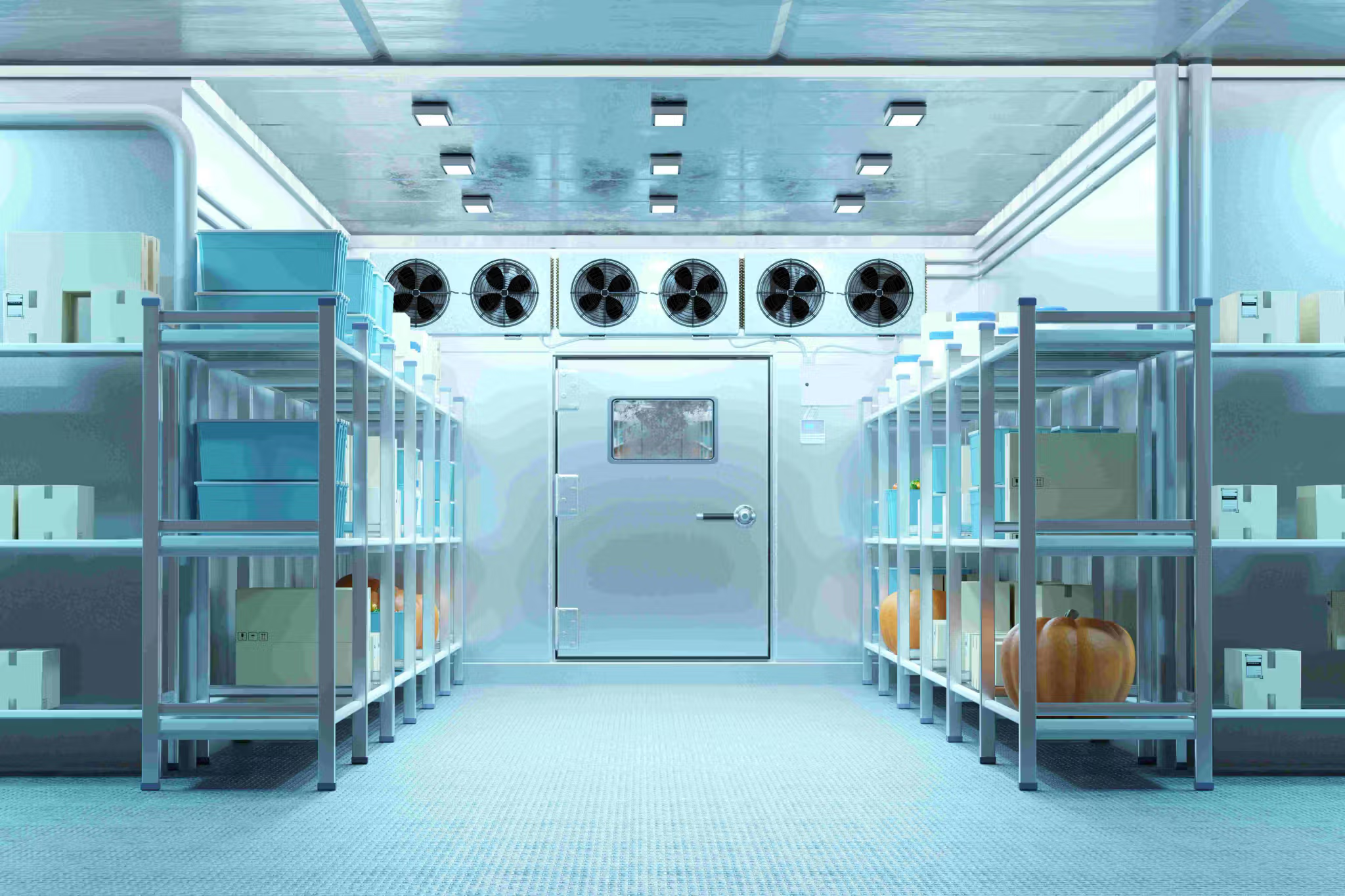
The phrase gets used pretty loosely. Some facilities just keep the unit above freezing and below sweltering. Others maintain a tighter range, typically between 55 and 80 degrees, with some humidity regulation built in.
Higher-quality climate-controlled storage typically manages both a stable temperature band and a humidity ceiling, often aiming to stay below roughly 55 percent relative humidity. That second piece matters more than most people realize. Wood, paper, and electronics don’t care much if it’s 72 or 78 degrees. They care a lot about moisture sitting in the air for months.
If you’re shopping around, ask what range the facility holds and whether humidity is monitored separately. “Temperature controlled” alone is sometimes just a marketing phrase. Specs vary.
Items That Genuinely Need the Upgrade
The items most vulnerable to fluctuating storage conditions tend to share a common thread: they’re made of natural materials or contain sensitive components. Wood furniture, especially antiques or anything with veneer, warps and cracks in repeated humidity swings. Leather goods (jackets, sofas, bags) dry out, crack, or develop mildew. Electronics like televisions, computers, and stereo equipment suffer from condensation on circuit boards.
Photographs, documents, books, and vinyl records absorb moisture and lose integrity over time. Musical instruments, particularly wooden or stringed ones, lose tuning stability and develop subtle warping that affects sound. Artwork on canvas, paper, or with wooden frames faces similar damage. Wine collections need stable conditions to age properly. Certain sealed collectibles and temperature-sensitive items round out the list.
Mold and excess humidity damage these items in slow, often invisible ways. The EPA’s brief guide to mold and moisture explains that indoor relative humidity above 60 percent creates ideal conditions for mold growth. A storage unit sitting in that range for weeks at a time is a problem.
Stuff That Can Live in Standard Storage Just Fine
Plenty of household items hold up fine in regular storage. Patio furniture, gardening tools, plastic bins of off-season clothes, kitchenware, kids’ toys, and sports equipment. As long as those things aren’t going to be ruined by a wider temperature swing, you can save the money.
A wooden bookshelf from Ikea probably survives standard storage. A walnut writing desk from the 1920s probably doesn’t. A useful rule of thumb is whether the item involves natural materials, electronics, or anything fragile to humidity. If yes, lean toward the upgrade. If no, the basic unit works.
Humidity Does More Damage Than Heat
Most damage in long-term storage comes from moisture, not temperature. Warping wood, foxed paper, oxidized metal, fogged glass: all moisture issues.
The Library of Congress book preservation guide recommends keeping books at a stable relative humidity between 30 and 55 percent. That’s a tighter band than most storage facilities advertise. If you’re storing genealogy documents, family letters, or anything with sentimental value, ask about the humidity range specifically, not just the temperature setting.
Some facilities run dehumidifiers. Others rely on HVAC alone. Knowing which is which helps set expectations.
Questions to Ask Before You Sign
Before committing to a contract, a few specifics are worth confirming. Ask what temperature range the facility holds and whether humidity is controlled as a separate variable. Find out if units are individually monitored or if the whole building runs on one system. Ask what happens if the climate system fails, and whether the facility has backup power. Ventilation also matters: a sealed unit with no air exchange traps whatever moisture enters with your belongings.
A facility that answers these clearly is probably worth your money. One that gets vague is probably not.
A Word on Prep
Even the best storage unit can’t undo bad packing. Clean and fully dry anything before it goes in. Moisture from a damp blanket migrates to everything around it. Skip sealed plastic bags for long-term storage; trapped air condenses. Use cotton sheets or breathable covers for furniture instead of plastic wrap.
Elevate boxes off the floor. Even a couple of inches helps if anything leaks nearby.
Clear labels matter more than people think during long-term storage. Specifics save time when you finally need that one set of dishes.
Making the Cost Call
Climate-controlled units run anywhere from 25 to 50 percent more than standard ones, depending on the market. For a $100 monthly unit, that’s another $25 to $50.
Worth it for a year of storing your grandmother’s piano. Maybe not worth it for last season’s camping gear.
The math gets simpler when you think about replacement cost. If everything in the unit could be replaced from Target for under $500, you probably don’t need the upgrade. If you’re storing things you couldn’t replace at all, the math flips the other way.
